Thursday, July 29, 2010

The AHA! Moment

One of the things I love the most about the rehearsal process is the arrival of AHA! moments. We all get them...those bursts of clarity that explode in your head and clear the fogginess of a problem that you were musing on, revealing a golden light pointing out the new direction.

I live for those moments of creativity and clarity.

Sometimes, I feel both good and foolish when I catch myself literally saying "aha!" in that moment of discovery. I feel foolish because it's such a cliche, and who goes around saying "AHA!" any more outside of a melodrama?

But then I feel good, because cliches come from somewhere. The AHA! moment is a timeless connection to artists and great thinkers throughout history. Socrates or Aristotle probably said it first, but I can imagine Da Vinci...Michaelangelo...Shakespeare...Moliere...Mozart saying AHA! just before they put pen in hand and started creating their masterpieces.

My most recent AHA! moment on The Case of Humanity vs. Pontius Pilate came during a phone conversation with my good friend Rachel. Our relationship began when she wandered into one of my acting classes nearly 15 years ago, and since that time, she has taught me far more than I ever taught her.

When in doubt, call a friend.

So I've been working thru some of the blocks I've been running up against in the play, trying to really understand and feel the strength of faith that Joseph must have had to get Jesus' body from the cross, clean his body and prepare him for burial in his own tomb.

There are so many layers of human emotion running thru that act, and I'm trying peel each layer back to feel the deepest possible truth of what motivates Joseph and what his personal perspective was on the series of crucifixion events.

My biggest obstacle and challenge has been to find the love of Jesus that Joseph must have felt. An extraordinary love for....*something*....that made him risk his reputation and welfare by doing something that could cause great harm to him and his family.

Now, Rachel and I talk maybe every couple of years, usually when one of us is doing a play or needs someone to bounce some creative thoughts off of, so it was time for a check-in. I needed some help.
And Now, A Few Words from our Master

I mentioned my difficulty feeling what Joseph must be feeling to Rachel, and once again, her response was an example of the student schooling the teacher.

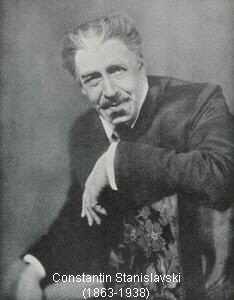
She reminded me of the teachings of Stanislavsky, and the "magic IF". I laughed as soon as she said those words--those are the same words that I teach in every acting class...in the very first class. I was the first person to introduce Rachel to Stanislavsky...and here she was re-introducing him to me for the first time again.

It's funny how things work like that.

You Can't Always Feel What You Want to Feel

In the theater, I believe that it's always better to actually feel what your character feels. I like it when a character takes over my body--I get to see the world thru a whole new set of eyes and experience things that I wouldn't ordinarily do.

But sometimes...you hit a block. You're not feeling what the character is feeling...what the script says he's feeling. What to do then?

The Magic IF

You break out the "magic IF". The power in the magic IF is that you don't HAVE to feel what the character is feeling. You just have to act AS IF you were feeling what the character is feeling.

As Stanislavsky explains, that little "if", makes all the difference in the world. The actor playing Hamlet has probably never killed 3 people in real life, as Hamlet does in the course of the play. So he can't really feel what Hamlet does with each death, yet he must act AS IF he has killed these people.

The "if" allows the actor to go to those hidden places in their soul--we are all human, and therefore we come hard-wired with the same set of emotions. Which means as humans, we can ALL kill. Feel lust. Feel rage, jealousy, hatred, intense sorrow or joy, etc.

And as Rachel pointed out...that "if" makes it safe for us to live in those hidden places inside ourselves in the theater...it's not really 'me' doing those things the character is...I'm just doing or saying those things as if I were that other person.

The beauty of a play is that the lines stay the same every night and the story always ends the same way. The actor keeps his (or her) identity...their own sense of self strong, precisely because they know that they can give over to the 'if' and by 10:30, its over. That other person leaves and you return to yourself again.

It's an out of body experience...a trip, if you will. Except you know how it will go every night, so you can just ease into it and let it flow.

The AHA! moment is...

All a long-winded way of saying...I don't have to love Jesus. I have to behave AS IF I love Jesus. Now I have a starting point and lots of thoughts, feelings, and choices suddenly spring to mind.

(and yes, I did say "AHA!" when that light bulb went off)

Don't you just LOVE that feeling of clarity? Do you have a story to share about your last AHA! moment?

Sunday, July 25, 2010

Begin...At The Beginning

As it turns out, I'm stepping into The Case of Humanity vs. Pontius Pilate as a replacement for an actor who was unable to continue in the project for work-related reasons.

I mention this because it adds a special twist to the role--not only do I have a compressed time period to do the role (3 weeks, which is plenty of time for the size of the role), but I have an additional dynamic of blending with a cast and director already quite used to working with each other by this time of the process.

Process? Which Process?

The thing is, every actor has their own process for developing a role. Rehearsals are kind of like the elementary school playground at lunchtime--it's where everyone in the cast learns how to play with each other. So by coming into rehearsals 4 weeks into a 7 week process--well, I'm like the new kid in school. I've got to figure out the social and creative dynamics real quickly, yet still adhere to my own artistic process.

By the time a cast is four weeks into rehearsal, a common artistic language has been established between the director and cast. Each actor knows how the others work and has adjusted so each gets what they need.

For example, some actors can't 'act' until they know their lines. Others are highly analytical and want to know every last detail about their character and events of the play. Some actors respond best thru movement or improvisation and use rehearsal to constantly try a variety of new things, while others might strive to speak every line and perform every movement with exact, consistent precision day-after-day.

Rehearsals are a place to figure all that out, and being the new kid in the cast means that THEY have to start the process all over again with ME. Which makes me feel a little awkward, self-concious, and just a little unsure of how to fit in.

In the Beginning...

I was reminded of the importance of process tonight by the director Marie, who was a cast mate of mine when we played in Squabbles together a little more than a year ago. We spent quite a bit of time talking art/theater/life during the run of that show, and we have a mutual respect for each others acting talents. I trust her as a director.

I've now had three rehearsals with the cast, and Marie has shown some surprise at the direction I've taken the character in. At our first rehearsal, she was treating me like all the other actors in the cast, giving me notes that were more appropriate for an actor 4 weeks into rehearsal than one who was just in days 1-5 of even having a script.

She was pushing me in a direction that I wasn't quite ready to go yet.

In the first week of rehearsal, a director might ask "what do you think the character is feeling here? Or "What's going on for him in this scene?"

In the fourth week of rehearsal, you might get the note like "I need a bigger emotional response from you here-- can you turn it up a notch?" And that's a problem when I'm not sure of which emotional response is right for the moment based on how the character is feeling and what I am actually getting from my scene partner.

Emotions need to be justified. Sometimes you take a leap of faith and dive into an emotional response and sometimes they need to build slowly.

For my own personal process--I start slowly. And that's a risk to take when joining a new cast...you want to impress everyone and prove to them why you were chosen for the part--but that's a path that leads to insincere acting.

The Actor As Rodin

The metaphor that I use for developing a character is that I am a sculptor. I must first envision who the character is and get a picture in my mind, and then the rehearsal process is like sculpting...I am the block of clay and I must remove things that don't belong until I am left with what is left--the bare, essential truth of the character.

Like a piece of sculpture, the character *emerges* from the clay--I might start with a vision, but the finished piece creates itself in the process. In fact, one of my great mentors described the art of the theater as "the process of coming into creativity." His conviction was that actors do not create a character--they open themselves up in such a way as the character comes into them.

It's a mysterious (and wonderful) process...that CAN be attained through rigorous and focused practice. But it takes time. A cake that is supposed to bake for 20 minutes will not taste as good if it is only baked for 15.

The Truth Shall Set You Free

For me...the first step I take when I get a role is to ask questions...what is the truth of this character? Why are they in the play? What drives the character to do what they do and...what are they trying to hide?"

That last question is often the most telling for me--if I know the characters darkest secrets that they don't want anyone to know, then I know what motivates them to do whatever it is that they do in the play.

I perceive my job as an actor is to bring Truth to light. To create a memorable character out of words on a paper who is a vital cog to the story being told. To bring life to a fictitious character and make him so real that an audience believes they know him beyond the script--that they can tell me things about the character that are never revealed in the script.

I look for the truth of the character and try to bring that out in myself.

I cannot even begin to 'act' until I know these truths. I can learn my lines, learn blocking, improvise and do all kinds of other groundwork during the early rehearsals, but I don't grasp the Truth so quickly.

So for me, the early rehearsals are usually pretty ugly. I'll make some choices on what the character wants, play them, and then see how they felt....truthful or not.

Next time thru, I'll make completely different choices, even if my first choice felt good, because I want to make sure I'm not missing something *better*. All choices in rehearsals are good--but some are better, and more interesting than others.

So tonight, I got a nice compliment from Marie (whose job as director is, after all, to compliment the actors into giving good performances). It wasn't just that it was nice--it was the look in her eye, the deep breath she took before saying it and the smile that came with it.

"Mark," she said, "I have to learn to trust you more. Some of the choices you make are not what I would make, and sometimes they are 180 degrees from what I was thinking. But they're always interesting choices. And I can see that you go a lot deeper into the character than just what's in the script and I believe what you're saying. Keep doing whatever it is that you're doing."

As compliments go, that ranks up there for me. I'm nowhere's near 'there' yet, but as an actor, the only thing I try to be is interesting, truthful and believable. I don't want to rush that process.

So I'm on the path for 2 out of 3, so far. Show date is August 7th. We'll see how far I get.

Wednesday, July 21, 2010

I GOT THE PART!!!

Those are probably the most cherished words any actor will ever speak.

Getting a role is pure bliss for the ego--a validation of all the work, training, courage and passion that everyone who dares to get on a stage possesses . It's the best part of being an actor, getting a job. It's probably a more joyful occasion than actually performing.

You Like Me. You REALLY Like Me! (you DO, don't you?)

Once the euphoria wears off though (and it's ALWAYS a short-lived joy), it's replaced by a nervousness and nagging fear. Sure, you think, I did a good job in the audition. But what if I can't really play the role? Now I have to perform. They must have seen 20 other actors for this role--why did they pick ME? It's kind of like a battered wife syndrome--you've been rejected so many times that you start thinking that maybe I'm not really that good, and even when someone DOES like you, you sort of think, well, maybe they couldn't find anyone better or "what's wrong with this person that likes me?"

Yeah, actors are a little crazy and insecure. Like I said, spend your time in constant cycles of yearning and rejection sometime and see what it does to YOU. Most people are smart enough to ever subject themselves to that type of abuse.

As the day of the first rehearsal draws near, the nervousness magnifies, but excitement and eagerness creep in too. You're going to get to PLAY! You're getting to do the thing you LOVE to do more than anything else in the world. And make no doubt about it, if you're an actor, there is no place you'd rather be than on a stage, and no lover will ever capture your heart like performing will.

And the day you stop feeling that way is the day that you stop acting.

You may eventually find something resembling balance in your life, but acting will still dominate. Actors often miss weddings, funerals, birthday parties, anniversaries and other special occasions because of rehearsals or performances. You've heard the phrase "the show must go on", and the show doesn't care that it's your wedding anniversary, your mom is sick in the hospital or that your brother is graduating from high school--there is an audience that needs to be satisfied and people have paid money to see you perform.

Very few jobs require the total dedication that the theater does--she is a very demanding, cruel mistress.

Ring, Ring...

In recent years, I've taken leave of this mistress in exchange for a little bit of stability and the pleasure that comes with regular paychecks. And I work with people who appreciate me and they don't make me interview for my job every day. (of course, they work me like the rented mule that I am, but that's okay--at least I'm working!) I'm not the kind of person to look back, but every now and then, that cruel mistress tugs at my heartstrings.

She's the crazy girlfriend who is so totally bad for you, but being with her is the most incredibly amazing INTENSE time that you keep seeing her even though you KNOW she is going wreak havoc in your life.

So imagine my surprise when one week ago, I get a call out of the blue from my director friend Marie who says "how'd you like to play a role for me?"

I'm Just A Boy Who Can't Say No

Being a typical actor, the first word out of my mouth was "sure". I didn't even think about it...it slipped out before I had a chance to take it back. It's a habitual response, and you'll know your around people who have acted before if whenever you ask them something the answer is ALWAYS "yes".

"Hey, have you ever ridden a horse before?" Yes. "Can you stand on your head?" Yes. "Can you play castanets and dance flamenco?" Yes. "Can we set you on fire?" Yes.

(by the way, I have actually been asked all of those questions before in the casting process. And eventually did all of them in performance, even though a more accurate answer at the time would have been "no")

Actors are superhuman--we think we can do anything any human can do, and if we haven't done it before, then we're sure that we can learn it quickly enough to look like we've been doing it for years by opening night. You never know what is going to get you a role...or keep you from getting a role, so you just say "yes" to everything.

So when Marie asked me to play a role for her, I said "yes" before even thinking to ask the more logical question--what's the role?

Even a Cruel Mistress Has a Sense of Humor

Which is how I now find myself playing Joseph of Aramethia in play titled "The Case of Humanity vs. Pontius Pilate".

That would be SAINT Joseph of Arimithea. The man who gets Jesus from the cross and buries him in his finest linens in a burial plot meant for himself. The Joseph who eventually builds the first Christian church in England and brings the Holy Grail along with him.

One has to appreciate the irony and the implied humor (the joke is on me)--we've got an avowed athiest playing a venerated Catholic saint...a man of supreme faith. But hey, I got the part!!

This is gonna be interesting, to say the least. I'll pour myself into the role and it poses some challenges to me, which is something I like in a role. I like to be stretched--I like to learn about myself and discover new feelings, emotions, thoughts. I often use the theater to become more enlightened.

I don't know how I will fare in the role, and it's too early to worry about that. All I can do is go about my process for developing role and seek the truth of the character. Maybe I'll find it...and maybe I won't.

All I'm certain of is that come performance time, either me or the audience is going to be surprised by what happens. But for now...all that matters is...I GOT THE PART!

Next up: What do I do now? (first rehearsals)


Add to Technorati Favorites

Tuesday, July 20, 2010

New Direction

I have a confession to make: I haven't been taking my own advice.

This poor blog has been neglected ever since I created it because I've been writing on topics that I think I should be writing on--not the stuff that really interests me.

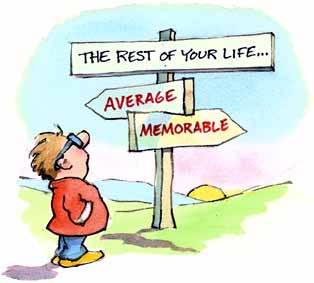
In my mind, the ONLY thing that I have published in the past year that I am actually proud of can be found here. In my writing, I've settled for being average, when I preach as an artist to always work to create something special.

It's time to change direction and follow my own path. I've been trying to play the role of a social media marketing expert and that's just not really me.

I mean, I AM a social media marketing expert. I've been wired into the 'net, building online communities and doing social media campaigns for major brands for almost 15 years now and have a long list of really cool accomplishments and events that I've been a part of or was witness to. I've got good stories to tell about this business, and I've earned my street cred, so yeah, I think it's fair to call me a social media marketing expert.

But I'm so much MORE than that, and I've been consumed with all things computer/hi tech since I moved to California in 1999. I have many more facets that I haven't shown and since there are already hundreds of other people already falling all over themselves trying to establish a personal brand and get recognized as an industry expert, I will gladly leave the field to them.

I will still write on social media topics on the LiveWorld blog from time to time. I mean, it comes with my job. If you're interested in all things about social media marketing, then please follow us on Facebook too.

But now, it's time to write about...whatever interests me. I hope it will interest you too. At least enough to get you thinking and talking, which is the natural order of things. We don't always follow the natural order of things, but it's good to be aware, in any event.

Beginning tomorrow, I will start a series of posts chronicling my latest adventure--performing in a play. Many of my friends know of my theatrical background, and a few have asked me to write on how an actor goes about preparing for a role, so that's where I'll start my new direction.

I hope you come along for the journey. And please feel free to suggest topics that you would like me to write on!

Friday, June 11, 2010

The 3 Rules of Social Media Crisis Management

What would you do if you are a business who took a dive into the warm, inviting pool of social media for marketing reasons...

...and then found yourself in a crocodile-infested swamp during a feeding frenzy?

There are a couple of major brands who are in the news right now as the object of some serious brand-bashing in social channels.

It's a vicious reminder that while Twitter and Facebook are great tools for connecting with your customers, things can go horribly wrong for a brand in a hurry in those channels too.

Without getting into a discussion of whether these brands deserve to bear the brunt of public anger and mistrust or not, here are three simple rules to help any brand manage a crisis using social media.

3 Rules of Social Media Crisis Management
  1. A brand cannot win an argument online. Ever. Don't bother trying--it comes across as defensive and makes things worse. Give facts and resources, not messaging.
  2. Admit your mistakes, say you're sorry and show us what you are doing to fix the problem.
  3. Repeat #1 and #2 as often as necessary.
That's it. What do you think? Anything you would add?
Add to Technorati Favorites

Tuesday, April 20, 2010

Facebook Wants You To Totally, Like...Like EVERYTHING!

Facebook wants to make the Internet a much more like-able place, and is announcing several changes around its "LIKE" button at its F8 developers conference this week.

1. Embedding the Like button on sites across the Internet
2. Displaying brand/community Pages that users have Liked on their personal Facebook profile page
3. Recommending new brands/community Pages for Facebook users to Like
4. Renaming the “Become a Fan” to “Like”

The moves are just further evidence of Facebook’s strategy to strengthen the connection between its members and marketers.

You Like Me..You REALLY Like Me!

Facebook’s introduction of a “Like” button that online publishers can add to their sites is the biggest news of all. The new button functions much like “Digg this” or "Tweet This," and will supplement Facebook Connect as a tool that enables Facebook users to share articles to their profile pages.

So why should Facebook users or marketers care?Two big reasons: 1) Activity Feed 2) Profile Page.

Unlike Digg, which allows you to anonymously recommend web content, the Facebook button will publicly identify your external “Likes” by displaying a note in your Activity Feed and on your personal profile page. Facebook will also add the list of brands and cause pages that you follow, or have “Liked” in your personal profile.

We Think You Will Also Like...

In fact, Facebook will go one step further and recommend Pages you might like, based on your current “Likes” and content you post to Facebook.

Update your status with a post that says you "can't wait to go to the John Mayer concert next week," and you will soon see "John Mayer" suggested as a Facebook Page you should 'like'.

Some privacy issues have already been raised over concerns that the “Like” button, distributed across the web, could be used to track individual user behavior, but Facebook insists that it will use the data ONLY to provide better advertising and marketing recommendations within the Facebook platform.

Reach Out And Touch Someone...Please

Ultimately, Facebook wants to better connect people with brands. Most studies show that peer-to-peer recommendations are highly influential in purchasing decisions, and displaying a list of brands and products that consumers 'like' on their personal profile page and activity feeds constitutes a public endorsement. So, getting a “seal of approval” on a personal profile page that gives the appearance of endorsing a brand really can pay off for marketers.

A Word (or two) of Caution

There's also level of trust involved here that both sides (Facebook and brands) have yet to fully earn. Facebook has made a number of missteps on privacy issuesthat has members feeling leery about what Facebook is doing with their data. And brands need to alter their normal behavior when on Facebook and not be too intrusive into what is, after all, a personal experience for the members.

Most people don't join Facebook to connect with brands--they join to connect with their real-world friends and family. As long as brands play nice and join--but don't try to dominate--the conversation, my take is that they will be welcome on the personal pages of Facebook members. It will be a delicate balance.

What are your thoughts? Is Facebook ruining the social experience for members by facilitating brand connections or just bringing the marketplace to where the people are?

Monday, April 5, 2010

Facebook Gets Brand-Friendlier

Facebook made a few moves last week to make themselves more friendly to brands and brand marketing, creating new Community Pages and luring members to connect with brands by renaming the ‘fan’ button.

These new policies are an open invitation from Facebook for businesses to become more active on the platform. While these are more evolutionary than revolutionary changes, brands should understand how Facebook is providing more opportunities for your business by:
  • Renaming the Fan button on Pages to Like
  • Creating new category: Community Pages
  • Renaming Pages to Official Pages
Does It Really Matter If I ‘Fan’ or ‘Like’ a Brand?

Replacing the label 'Fan' for 'Like' is a subtle semantic change designed to dramatically increase the number of connections between people and brands, or total member reach.

From a social perspective, the difference between ‘fan’ and ‘like’ is the emotional connection to the brand—being a fan is a much deeper commitment and suggests a stronger sense of identity with the brand. “Like” is a much weaker connection, less discriminating and requires less of a commitment.

I like ice cream, for example. But I’m a fan of Blue Bell because I think it’s better than Ben and Jerry’s or Haagen Daaz. I still like Ben and Jerry's ice cream, but if I'm going to choose one to identify myself with, I'm going to tell my friends that I'm a 'fan' Blue Bell. Our fan loyalty is generally only given to one brand in a given category.

With the new label change, it's less of an emotional connection to say that I like Ben and Jerry's. And I like Haagen Daaz. And I like Blue Bell. The label on the 'join' button helps define my commitment to the brand.

Why Would Facebook Make This Change?

An internal memo from Facebook to its advertisers makes the case that people use the ‘like’ feature twice as much as the ‘fan’ feature. The name change is designed to get more people to connect with brands on Facebook.

While some might think that a brand would prefer a deeper connection that comes with attracting 'fans', the reality is that they don’t really care—it’s more about the numbers. Advertisers and marketers like BIG numbers and the numbers on most brand fan pages just aren’t large enough to justify big dollar investments yet.

Imagine, however, doubling your connections from 1 million fans to 2 million “likes” just by changing the label on a button. Sure it sounds better to say "we have 1 million fans", but if someone is going to give you big bucks to advertise on your platform, it's just as cool to say "2 million people like Brand X."

Even if the connections don't double immediately, any increase in activity comes from the result of very little effort and investment. Facebook's advertising and marketing revenue increases, and brands extend their reach just by changing the name on a button.

Smart move, Facebook.

The New Facebook Community Pages

What's a Community Page? It’s the newest classification of identity on Facebook bringing the total up to four: Profiles, Official Pages, Community Pages and Groups.

It’s getting a little confusing for users and brands, so here are the core differences between the pages:
  • Profiles are for humans—plain, ordinary people doing ordinary people things
  • Official Pages are for businesses, brands, and organizations. Musicians, artists, politicians and celebrities are included.
  • Community Pages are for member causes and topics that no one really ‘owns’.
  • Groups are a place for members to share professional interests or hobbies

Community pages are designed for users who want to bring attention to causes and topics of their choice, or to create ‘unofficial’ pages around brands or celebrities.

Causes highlight or promote actual causes with real-world consequences, like providing global disaster relief (500K fans), show support for gay marriage (660K fans) or protest the health care bill (1.2M fans).

Topics can be on any subject, but typically are a reflection of pop culture and entertaining memes, like “I Need a Vacation” (4.7M fans), “im just gonna rest my eyes while they text back....*next morning* dammit!!” (1.2M fans) or “I Stand In The Shower for An Hour Because I like Hot Water.” (1.1M fans)

Most topics are not really ‘owned’ by the creator of the page (ie: who owns the need for a vacation?), but owning the page gives certain privileges to a page admin, like the ability to email (or spam) all the fans of the page.

To reduce the spam threat, once a Community Page has passed a yet-to-be-defined number of fans, Facebook will convert the page to community ownership, like a wiki. The ability to email all fans of the page will be removed.

Official Pages are for businesses and brands on Facebook.

You must have the right to establish the page on behalf of the company/brand in order to create this type of page. So only Starbucks may own pages classified as Starbucks Official Pages. A fan may still create "Starbucks--The Best Coffee”, but this would now be classified as a “topic” and be categorized as a Community Page.

Artists, non-profit organizations, educational institutions, government agencies, politicians, movie stars and other celebrities will also use Official Pages. Fans of celebrities who want to create fan pages for their favorite artists would use the new Community Pages.

What Is Facebook Up To?

Quite simply, Facebook is trying to be more brand-friendly. By removing causes and topics from Pages and creating Community Pages, Facebook is doing some spring cleaning and making it easier for brands to be found.

If you were to search FB Pages for “Apple”, for example, NONE of the top 10 results in Pages would display the Cupertino-based computer maker. But you could find the topic “Apple turnover served over a hot, steaming child”, a business “An Apple A Day Depot” or the page for the Apple Valley PTA.

My hunch is that Official Pages will be weighted more heavily in search results and result in more click thrus to brand pages. Coupled with the semantic change to “liking” a brand, Facebook is clearly trying to increase traffic and build an ad platform that can meet or exceed television-like numbers for brands.

For all the advantages that online marketing offers, the gold standard for advertisers and marketers is still television. A very lowly-rated show on cable still garners more than a million viewers. There are around 300 Pages on Facebook that generate that type of attention, and most of those are of the "causes" and "topics" variety.

If Facebook wants to keep the marketing and advertising dollars flowing, they've got to get more traffic to brands any way they can. It's as simple as that.

What are your thoughts on Facebook’s new brand-friendly moves? Are these shrewd moves, adding to user confusion, or part of a massive selling-out by Facebook?


Add to Technorati Favorites